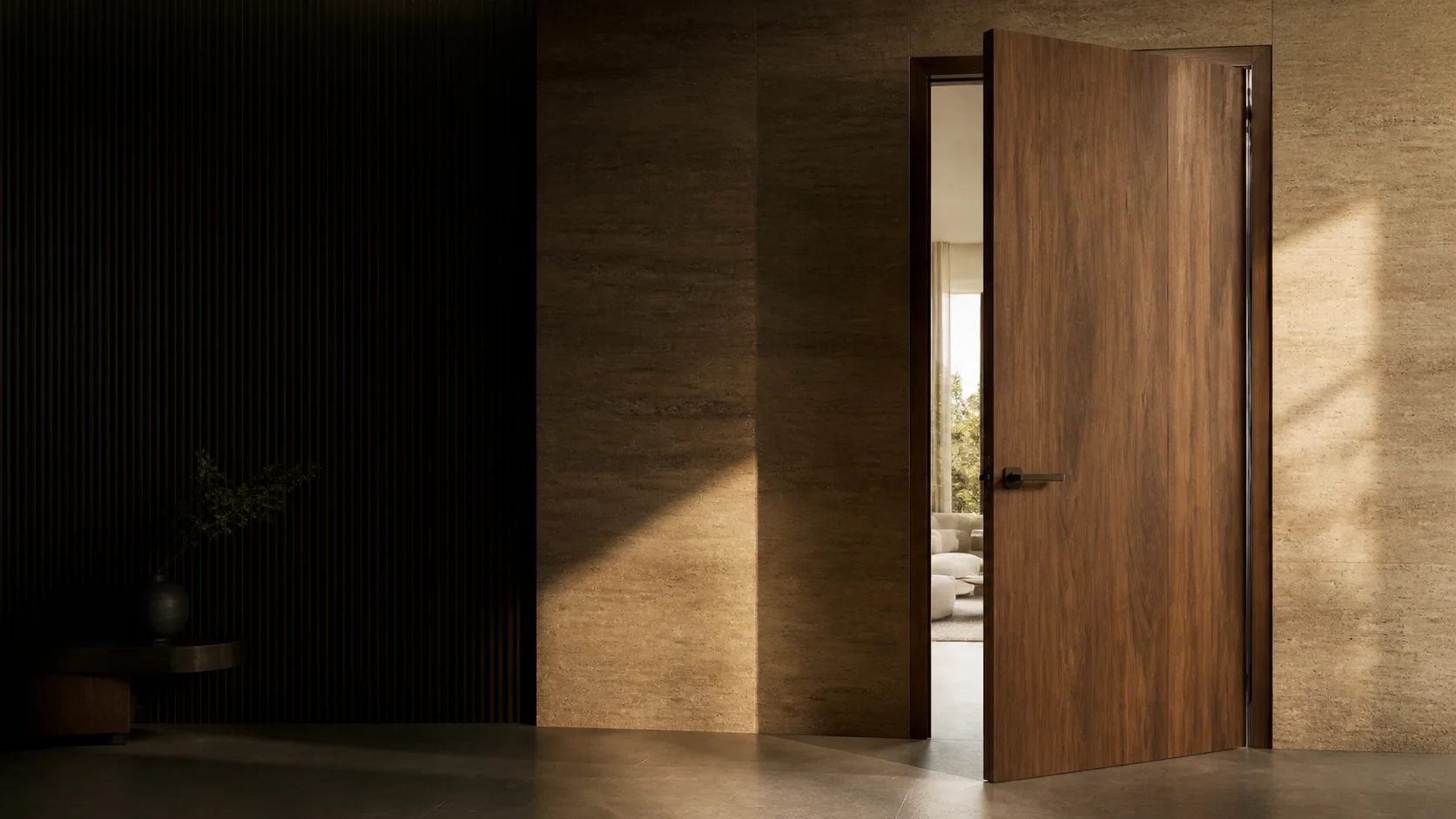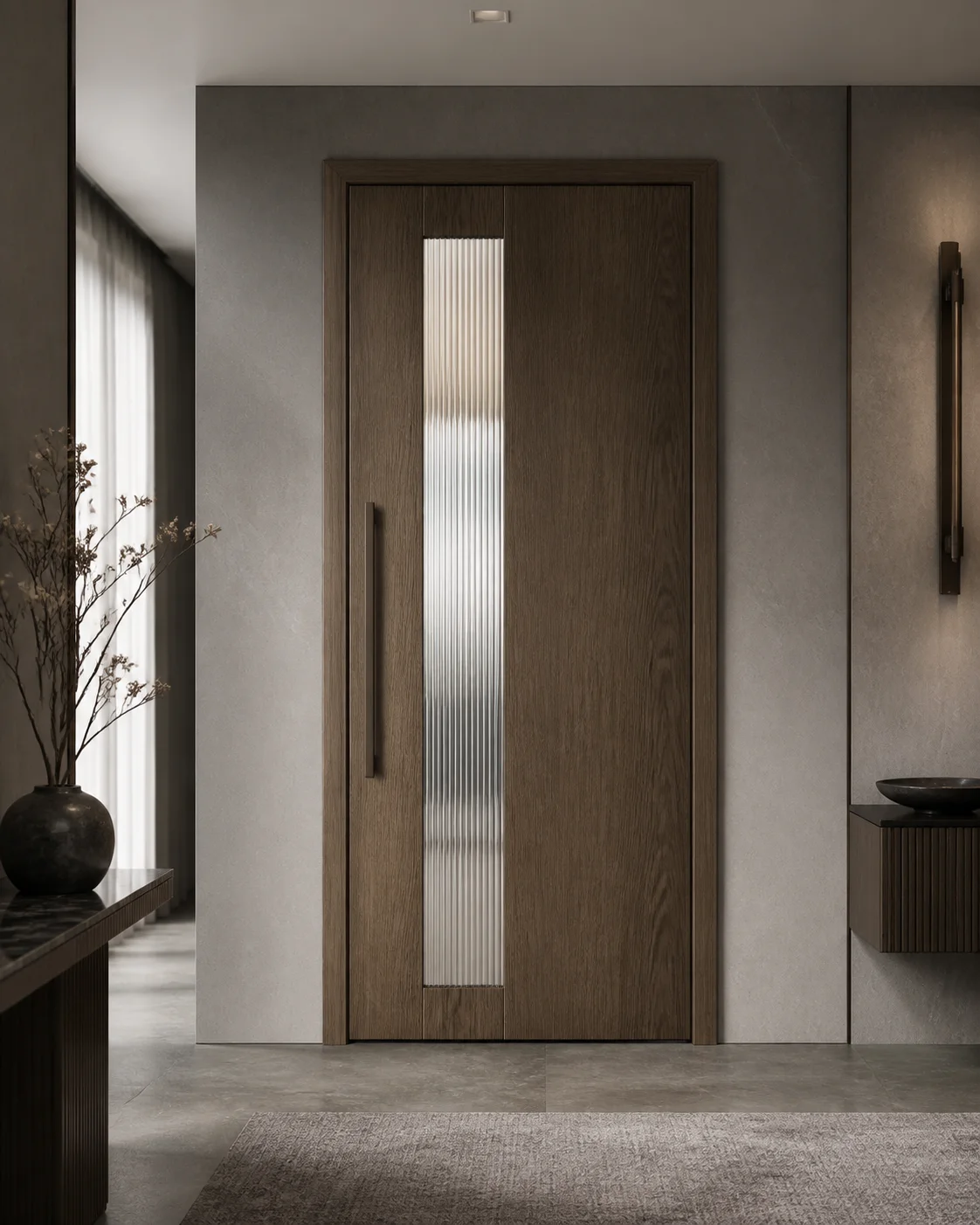

Wood-plastic composite (WPC) doors are widely selected for interior renovation projects due to their balanced performance in daily usage. Our R&D team has carried out systematic formulation adjustment and material testing for WPC door raw materials in recent months. The research mainly focuses on optimizing the mixing ratio of wood fiber and polymer matrix, selecting suitable auxiliary additives, and improving the internal bonding structure of composite materials. In the testing phase, samples go through multiple rounds of environmental simulation assessments, including humidity variation cycles, temperature fluctuation tests and surface abrasion experiments. The team records material deformation, surface integrity and structural stability data under different environments, and continuously fine-tunes the formula according to test feedback.
In the production stage, we adjust raw material feeding procedures and mixing parameters to make the composite material distribution more uniform across door panels. Compared with traditional wooden doors, properly formulated WPC materials can reduce the impact of moisture absorption, which helps lower the possibility of warping or cracking in humid spaces such as bathrooms and basements. Besides material research, the technical team also explores surface treatment solutions. Different coating processes are trialed to improve scratch resistance while maintaining natural wood texture on the door surface.
We attach importance to the environmental attributes of WPC raw materials. Most of the raw materials applied can be recycled, and the production process controls volatile substance release to meet relevant indoor decoration material standards. The optimized material system lays a solid foundation for follow-up product development. Our company will continue to conduct material research, combine market application feedback, and develop WPC door products that adapt to diverse indoor scenes, providing reliable door solutions for residential and commercial renovation projects.